
In brief
I’m currently Vicar, Fellowship Engagement Director, and Theologian-in-Residence at Lutheran Church of the Nativity I also teach at Brevard College and am a researcher with Trinity Lutheran Seminary at Capital University. I am married to portrait artist Shelby Scattergood, and we live in the Blue Ridge Mountains with our polar opposite cats: Bumi (a Ragdoll) and Raina (a Sphynx).
Education
I earned my PhD in School of Divinity’s Logos Institute at the University of St Andrews in Scotland. Before moving across the Atlantic, I earned my BA at North Carolina State University and both my MDiv and ThM at Union Presbyterian Seminary. I have also engaged in additional studies at Lutheran Theological Southern Seminary of Lenoir-Rhyne University
Research
My specialties are in systematic and philosophical theology as well as ethics. I work in a variety of areas within them, including disability theology, Christology, soteriology, eschatology, social ethics, and bioethics. I am also competent in religion and science, analytic philosophy, and religion and pop culture.
Service
I serve in various volunteer capacities to help better my community and the academy. Some of these include chairing AAR-Southeast’s Constructive Theologies section, and sitting on both the Society of Christian Philosophers’ Eastern Region Committee and UNC Health Pardee’s Ethics Committee. I have also been a voting lay delegate for the NC Synod’s (ELCA) Assembly.
Ministry
I was confirmed into The Episcopal Church in 2015, and from 2017-2022 I served on the staff of parishes in the Episcopal Dioceses of Virginia and North Carolina as a lay minister. I was also a lay preacher in a parish of the Scottish Episcopal Church from 2023-2024. I am in the ordination process with the NC Synod (ELCA) to become a Minister of Word & Sacrament (i.e,. Pastor).
In detail, part 1

I was raised Southern Baptist as a PK (preacher’s kid, for the uninitiated) and baptized fairly young after walking down the aisle of our church and professing faith in Jesus. However, things began to change as I got older. Particularly, and ironically, I started to have deep doubts about the truth of Christianity once I began attending a fundamentalist, Evangelical school during my middle and high school years. These doubts, combined with the allure of works from the so-called New Atheism, led to me abandoning religious faith altogether in order to become an avowed atheist.
When I entered university I did so as a rather unenthusiastic Communication major, but I took an “Introduction to the Old Testament” course to fulfill a general education requirement as a freshman. Through this course I was introduced to a way of reading an interacting with Scripture that I’d never encountered before, and I became fascinated with it. To nurture this budding interest in religious studies (and particularly Judaic studies, at the time), I also began attending a local synagogue.
Like the Old Testament course, my time in the synagogue opened my eyes to new things. I ended up attending services and activities there for about a year, and during this time my atheism began to soften. I was later introduced to a pair of Episcopal priests, one of whom I began meeting with semi-regularly for pastoral care (though I wouldn’t have called it that at the time). During one of these meetings the priest gave me a copy of The Book of Common Prayer, and I began to use some of the prayers in it meditatively despite the fact that I wouldn’t have said I really believed what they said.
As this softening of my disbelief continued I found an internal, spiritual life being cultivated which I’d never had before. During this period I seriously considered approaching my rabbi about becoming Jewish, but – despite the fact that a number of other events and encounters had made me increasingly sympathetic to religious faith – I could never quite bring myself to do it. Everything came to a head when, before going to an Erev Shabbat service one Friday evening, I learned that a friend’s father had died. My immediate thought was that we should pray for my friend, his father, and their family at the service, but this was puzzling to me. After all, why should an atheist pray for anyone, much less a dead person, if there’s no god there to hear it?
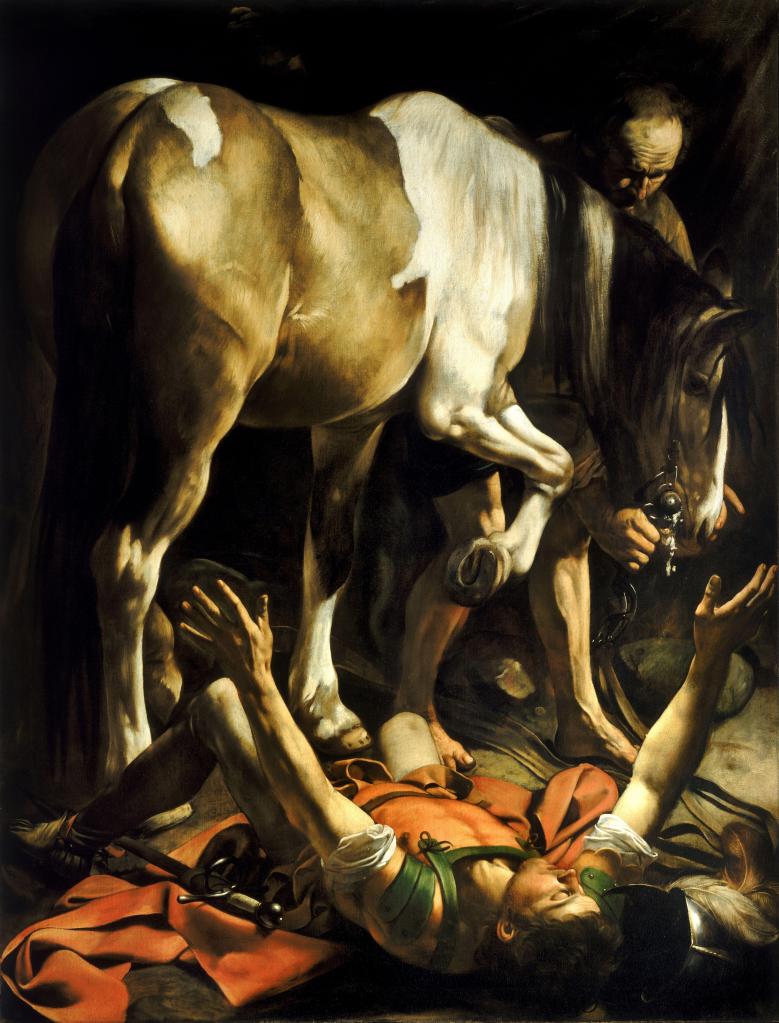
Nevertheless, I did pray for all of them that night. It struck me as such an obviously right thing to do, but even in the moment it continued to confuse me. On my drive home I rolled all of this around in my head. On the one hand, I seemed to believe in something (or someone) to whom I could pray yet, on the other hand, I still could not bring myself to discuss conversion with my rabbi. “Why?” I asked myself. It was then that a small voice inside of me replied, “because you believe Jesus was who he said he was, and now you need to figure out what to do with that information.” That reply surprised me, but it too struck me as obviously right. And so, in that moment, I accidentally became a Christian again.
From there I attended a variety of services at a diversity of churches in order to find a new religious home. In the end, I found myself in The Episcopal Church where I felt as though I was truly experiencing church for the first time, and it was there that I was Confirmed by the Rt. Rev. Michael Curry in 2015.
In detail, part 2
Through all of this I had transferred universities and begun pursuing a BA in Religious Studies at NC State University. As I approached graduation, I found God to be calling me to continue my education, and I wanted to do something that was more theologically-focused than my undergraduate degree had been. Given that I also believed I might be being lead to ordained, vocational ministry as a career seminary seemed to make sense, but I had been unable to access the formal discernment process in my church. So, I elected to attend Union Presbyterian Seminary of my own accord (i.e., not as a postulant for Holy Orders) that fall. I also got a job serving as a lay minister on the staff of a local parish which I held for the duration of my MDiv and ThM studies at Union.
During my masters degrees I discovered a deep interest in academic theology which I hoped to pursue further via PhD/ThD work. However, my applications to US-based doctoral programs were submitted during the height of the COVID-19 pandemic and so, with an extremely competitive admissions cycle, all of my applications were unsuccessful. As a result, I sought opportunities for full-time lay ministry instead and found a job closer to home which I intended to hold for some time.
Specifically, my plan was to serve this parish while pursuing a UK-based PhD via distance. This would allow me to have my cake and eat it too, as it were. But, as a kind of longshot, I applied to one residential program: the University of St Andrews. This was because I had found myself drawn to the work of analytic theologians like those that have called and do call St Andrews home. So, I just wanted (if anything) they might offer me, but I knew that there would be no way I could actually attend without a level of financial support that is incredibly difficult for foreign students to get in the UK. Much to my surprise, they not only gave me a place in the PhD program but also offered me a generous scholarship.
After much wrestling with our options, my wife and I decided to move to Scotland so that I could attend St Andrews. Through this time I was afforded a rich array of academic opportunities as well as a supportive community in which to pursue them. As my PhD studies drew to a close I began seeking opportunities in the church, academy, and elsewhere in which I could put my blend of experience and skills to work in the service of others. After weighing a number of these, I ended up accepting a call to serve a church just a few minutes up the road from my hometown, somewhere I’ve wanted to return to for many years.
Coincidentally enough, this church was a congregation of the Evangelical Luthern Church in America, a minister of which was the first person to serve my Holy Communion once I became Christian again. While in Scotland I had returned to the question of whether I might have a call not just to serve the local church but specifically to do so in an ordained capacity. Through the helpful guidance of others (including and especially a ministry discernment group facilitated by the university chaplain), I came to a renewed sense of openness to this possibility. And so, I broached the topic with my church’s pastor to see if formal discernment for ordination in the ELCA might be something worthwhile in my case.
He was very encouragins, and the wider congregation was enthusiastic about supporting this shared work between myself, them, and the NC Synod. Through them all I have had the opportunity to communally discern, and ultimately have my calling affirmed, which I had longed for all those years ago. I am now an Endorsed candidate for ordination as a Minister of Word & Sacrament (i.e., Pastor) in the ELCA and am in the progress of completing what few requirements remain in order for me to submit myself for Approval in the spring of 2027. Once Approved, I will be able to begin the process of seeking a first call, and after securing one I will have the honor of being ordained by the NC Synod’s first woman bishop in its nearly 225 year history.
 aaronbdavis.com